
How to Fix Corrupted Video Files Without Losing Quality [2026 Guide]
![How to Fix Corrupted Video Files Without Losing Quality [2026 Guide]](https://www.webtechmantra.com/wp-content/uploads/best-video-repair-software.jpg)
Sometimes, videos suddenly stop working, leaving important memories inaccessible. This issue happens due to corruption, incomplete downloads, or device problems. Many people struggle to find safe ways to fix their files without losing quality. Using the best video repair software can solve these issues, restoring your MP4 or MOV videos. In this guide, we explain why videos get corrupted and how to repair them by choosing the right option.
Part 1. Why Videos Get Corrupted: Common Causes of MP4 and MOV Damage
Many times, videos stop playing or fail because you need to fix corrupted MP4 files. Below are the most common reasons why MP4 and MOV videos get damaged with ease:
- Faulty Storage: Aging HDDs or SD cards develop bad sectors, affecting video frames. However, flash drives can degrade and cause metadata to be corrupted, making videos unplayable.
- Abrupt Shutdowns: System crashes while editing or playing video cut off pending writes. As a result, forced restarts can destroy file structure, leaving videos unreadable.
- Codec Incompatibility: Missing H.264/H.265 or audio codecs can produce playback errors or glitches. Therefore, files appear corrupted even if they are intact on disk.
- Broken Transfers: Unstable USB cables or Wi‑Fi drops, creating incomplete video copies. Partial downloads also leave MP4 files missing sections, making media players fail completely.
- Conversion Errors: Interrupted or improper compression may leave broken frames in video streams. GOP structures may break, making media players unable to decode content.
Part 2. 5 Essential Features to Look for in Video Repair Software
When your MP4 or MOV files fail, you need reliable tools. If you are also dealing with other types of digital data loss, you might want to check out our guide on professional data recovery services to understand how experts handle hardware-level corruption.
- Format Support: Tools must support all popular formats, such as MP4 and drone formats. Plus, it should enable repairing videos from cameras and phones without file rejection.
- Corruption Handling: Good software fixes broken headers and playback errors. It must ensure that even severely damaged files become playable and maintain correct structure.
- Large-File Repair: Support for high-resolution 4K or 8K videos prevents crashes during repair attempts. Moreover, it allows restoring big video projects without truncation or data loss.
- Batch Processing: Repairs multiple videos at the same time for efficiency and time-saving. It should prevent manual repetition and restore entire memory cards or folders.
- Preview Feature: Previewing before saving confirms whether the repair corrected all errors. However, it helps ensure quality and prevents saving limited, repaired, or broken files.
Part 3. Repairit: The Best Tool to Fix Corrupted MP4 and MOV Videos Quickly
Repairit is the best option to fix corrupted MP4 videos with ease. This advanced tool repairs files failing due to transcoding or incompatible encoding formats. You can also repair those videos that have been affected by malware and viruses. It uses sample videos to fix heavily corrupted footage for precise results. The tool completely works with advanced codecs such as H.264 and H.265.
Furthermore, it uses AI to analyze damage patterns and reconstruct broken video structures. Repairit has a quick mode that repairs videos while maintaining video quality. For those who prefer online repair rather than offline, it is also available in the cloud. This advanced tool preserves original encoding for high-end footage needing editing software compatibility. Also, it lets users check repaired sections before saving the full file to disk.
Key Feature
- Metadata Safety: Ensures original timestamps, frame rates, and audio-video sync remain intact.
- NAS Repair: Supports network-attached storage recovery without corrupting other files.
- No Limits: Repairs videos of any format, size, or corruption type without restrictions.
A Comprehensive Guide to Fix Corrupted Video Files Without Losing Quality
You need to go through the given steps to repair your damaged videos using Repairit:
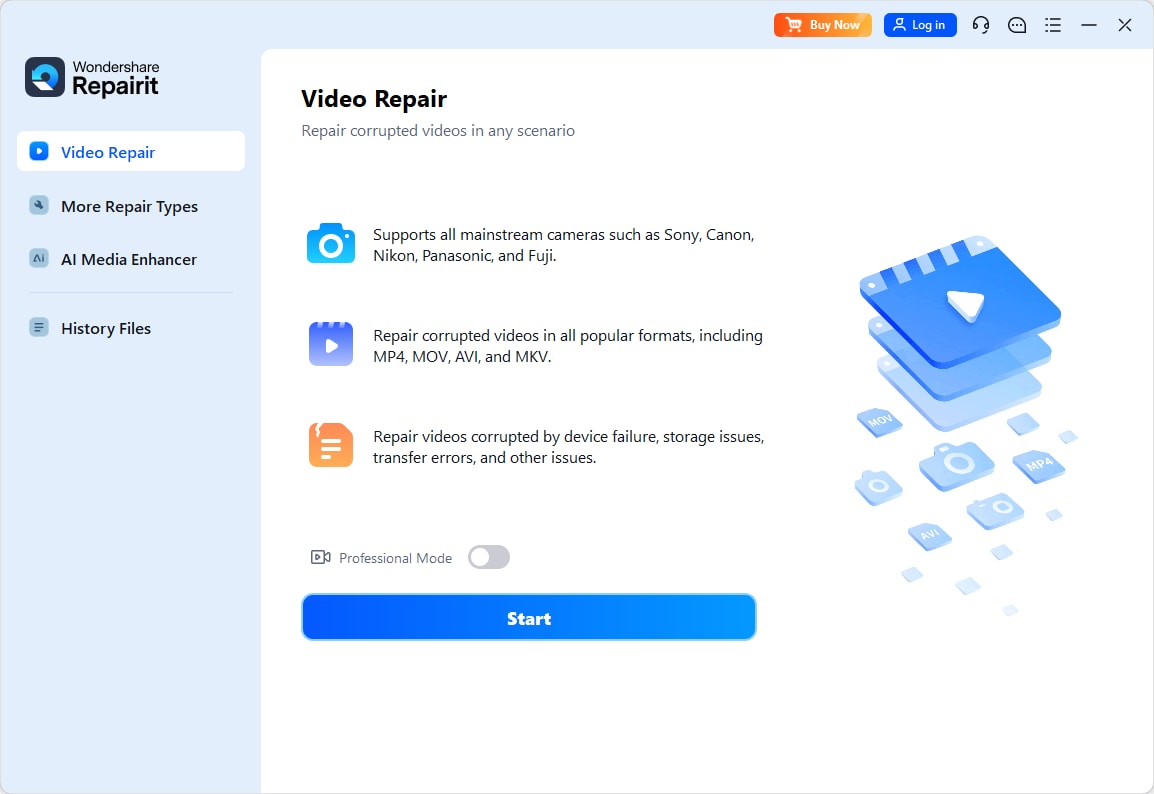
Step 1. Add Damaged Videos Files
When you access the tool, go to the “Video Repair” section, then click “Start.”
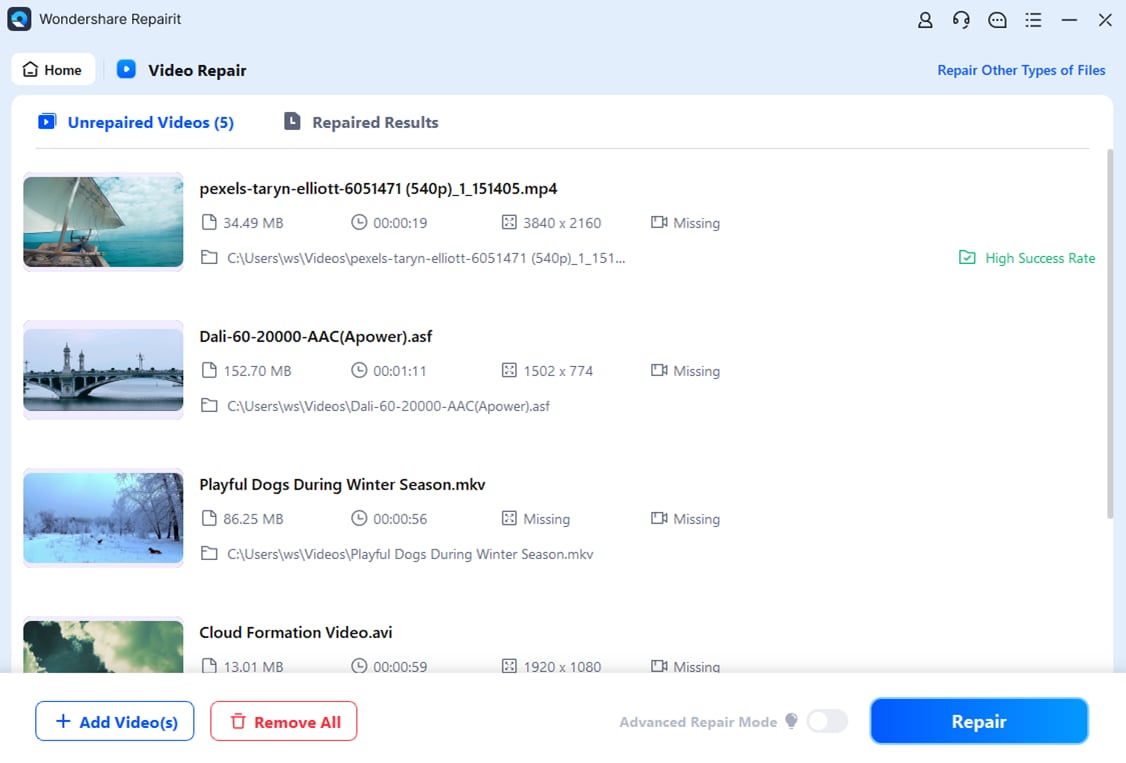
Step 2. Repair Corrupted Videos Files
As you add your damaged videos to Repairit, press the “Repair” button to begin restoring them.
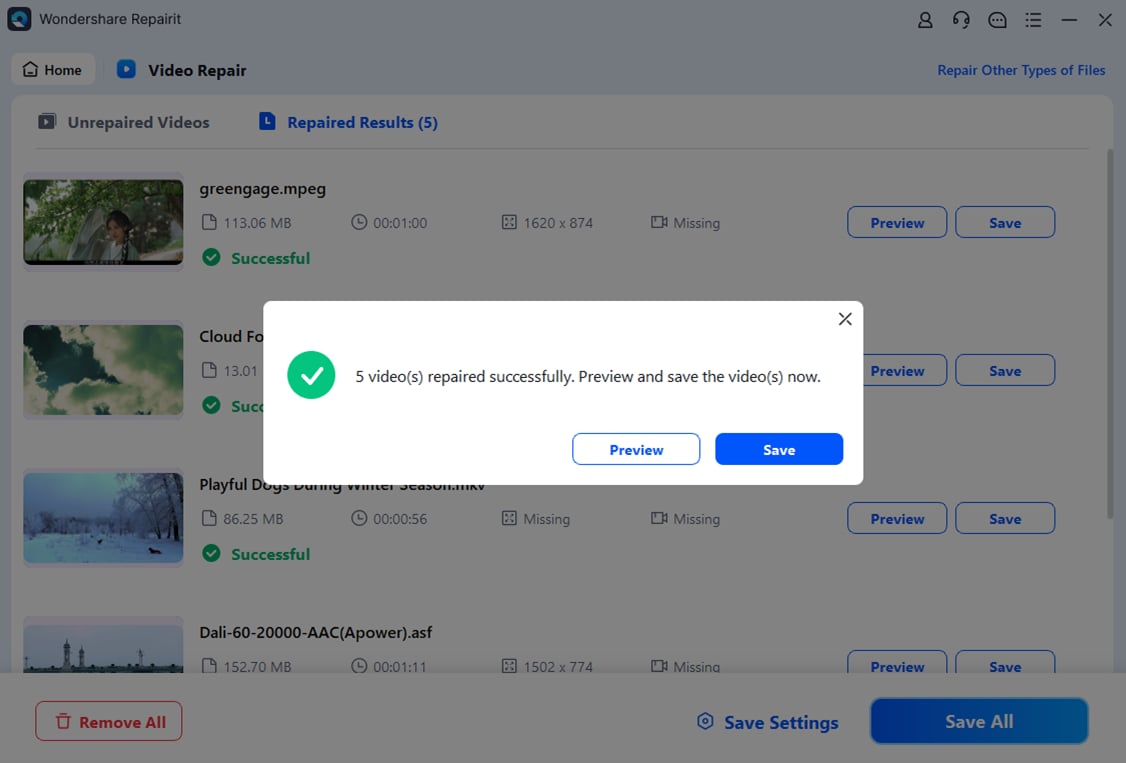
Step 3. Preview and Save Video Files
After repair, click “Preview” to check the videos, then press “Save” to store them.
Why Choose It
- AI-Powered: Uses artificial intelligence to repair videos while holding original quality and clarity.
- Batch Repair: Allows many videos to be repaired together to save time and effort
- Motion Sensor: Restores Gyroscope and motion data from sports cameras like GoPro to correct.
- Cross-Platform: Operates on Windows and macOS to ensure the workflow remains the same.
- Progress Logging: Display repair progress and logs to monitor and troubleshoot advanced issues.
Part 4. Other Solutions to Fix Corrupted MP4 and MOV Videos
When a video stops playing or shows errors, you may need a video repair solution to fix it. This part explains simple solutions to fix corrupted MP4 and MOV videos:
1. Use VLC’s Built‑in Repair And Convert Tools
VLC Media Player can fix corrupted MP4 by rebuilding broken indexes for a short time. This media player also includes repair features that rebuild damaged video structures. The convert feature even rewrites containers into clean formats, removing unreadable data parts. It only processes readable stream sections, so severely damaged video parts stay missing. Hence, go through the given steps to repair your damaged video using VLC:
Step 1. Open VLC Media Player and opt for “Media,” then pick “Convert/Save” from the menu.
Step 2. After that, go to the “File” section, press “+Add” to add your video, then choose “Convert/Save.”
Step 3. In the “Convert” window, opt for the “Settings” area and pick your preferred format from the “Profile” dropdown. As you select the desired option, click “Start” to start the conversion.
2. Re‑encode the MP4 with VLC, HandBrake, or FFmpeg
Sometimes, FFmpeg rewrites damaged MP4 files into clean containers for smoother playback. This MOV repair method rebuilds metadata indexes so players can read videos. Moreover, it skips unreadable frames, keeping playback stable without player crash issues. Therefore, re-encoding improves compatibility with editors that reject damaged or unusual formats. However, it cannot restore missing data when large video sections are forever lost. Follow the steps below to re‑encode MP4 with FFmpeg:
Step 1. Visit the official website of “FFmpeg” to click on the “Download” button to download it and install it.
Step 2. Look for the “Command Prompt” from the “Start” menu and opt for “Open.”
Step 3. In the CMD window, type “ffmpeg -i input.mp4 -c:v libx264 -c:a aac output.mp4.” Now, FFmpeg will decode readable frames and rebuild the video into a new file.
3. Restore the MP4 From A Backup Or Original Source
You should restore backups first because they fix corrupted MP4 without repair tools. A clean backup copy replaces damaged files without risking further data loss. Also, external drives, NAS, or cloud storage often store intact video versions. Therefore, restoring original exports avoids container errors caused by editing crashes. Re-copying footage from camera cards replaces incomplete or limited written files.
Conclusion
To conclude, corrupted videos can happen anytime due to crashes or storage faults. Understanding causes and using the right fixes helps restore files without quality loss. Simple tools work for minor damage, but serious corruption needs stronger solutions. Therefore, you need the best video repair software for reliable results. In such cases, Repairit is an ideal option to repair damaged videos without losing video quality as it uses AI-powered repair.
